
Davis County Release Date Types
There is no single date formula for everyone held on a Davis County case. A pretrial detainee has not received a sentence-based end date. Bail, a dismissal, a court release order, a detainer, and later case events may control when that person can leave. Even when bail is available, release occurs only after payment, review, and clearance of any other hold.
A person serving a county-jail commitment has a term imposed by a court. The Davis County custodial authority computes the practical end date from the judgment, custody credit, concurrent or consecutive terms, and any qualifying county good-behavior credit. A state prisoner has an indeterminate Utah sentence. The Utah Board of Pardons and Parole determines duration within that sentence and may set a parole/release date.
| Davis County custody setting | Date source | Main limit |
|---|---|---|
| Pretrial county jail | Court orders, bail status, and sheriff custody record | Usually no sentence-based release date |
| County commitment | Sentencing order and Davis County jail calculation | The county does not publish an individual date online |
| Utah state prison | Board order and verified parole/release date | A future date can change before release |
| Federal custody | Federal court and BOP records | Utah state rules do not control |
Find Davis County Inmate Release Dates
Begin with jurisdiction, not a date calculator. The Davis County inmate roster lists people in the correctional facility's current care and custody. It can supply the booking date, name number, charges, bail information, and arresting agency needed to route the search. A name disappearing from that roster does not say whether the person left the community, transferred, or was affected by a data correction.
- Search the Davis roster and save the exact name, name number, booking time, arresting agency, and case clues.
- Read the sentencing or release authority in the correct court case. Check for concurrent terms, consecutive terms, bail, warrants, and later orders.
- For a county commitment, ask Davis County corrections or records staff for the computed date and actual disposition.
- For a state sentence, search UDC and then compare the displayed parole/release date with the Board's published order.
- On or after a scheduled date, confirm the status change with the agency that held the person.
The sheriff's inmate-information page says exact individual release dates and times are not given on the public site. Completion releases are generally processed near the original booking hour, while the FAQ also describes the start of last-day commitment releases. Those are operating norms. They cannot be converted into a promise for one person.
For a full county custody search and record-request route, use the Davis County released inmates lookup. That path distinguishes community release from transfer to another authority.
Davis County UDC Release Date
The UDC Offender Search is relevant only when a Davis County person is currently incarcerated by UDC or currently supervised on probation or parole. Search by UDC number when possible. A name search requires at least one first-name and one last-name character. Match the identity, open the detail, and read the live status and date wording exactly as shown.
The verified UDC term is parole/release date. This research did not confirm a public field literally called “projected release date” or “tentative release date,” and it did not confirm that every result displays a date. UDC also warns that its public search covers only current supervision. It is not a historical database for every person who has fully discharged, and it does not cover an unsentenced detainee held only by Davis County.
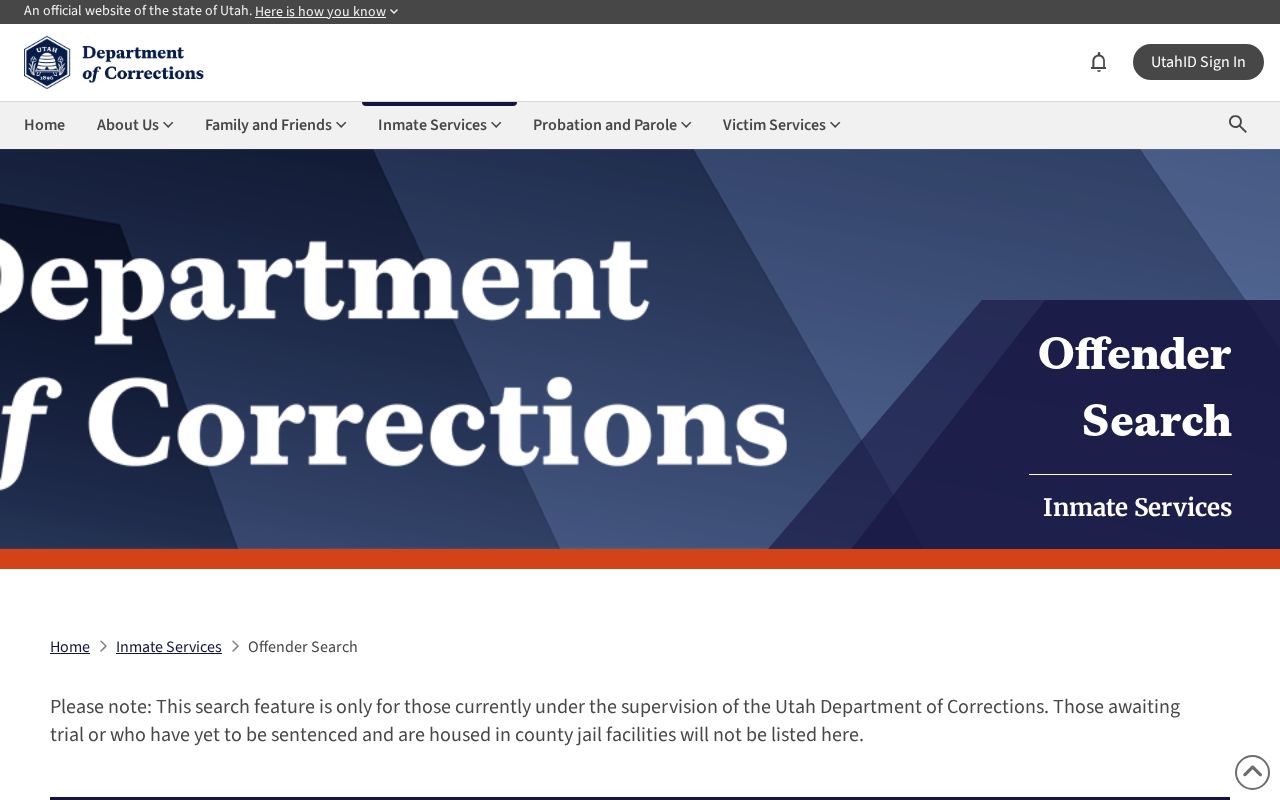
The UDC source page shows its search form and current-supervision warning. Review the official UDC search before using the captured interface below.
Note: If a person no longer appears after full discharge, use Board decisions and a focused UDC records request for the retained history.
Utah Rules for Davis Release Dates
Utah uses indeterminate felony sentencing. That means the court sets the statutory sentence framework while the Board decides the actual prison duration within the aggregate terms. Under Utah Code § 77-27-9, release is generally constrained by the judicial minimum term, subject to the section's procedures and exceptions. Mandatory minimums and offense-specific limits can also matter.
There is no verified general Utah law requiring an ordinary state prisoner to serve about 85 percent of the sentence. That federal-style shortcut does not describe Utah's Board system. Board guidelines, risk information, institutional conduct, case facts, statutory minimums and maximums, and a release plan may all inform the decision. The Board states that no one factor controls and its guidelines do not create a guaranteed release right.
Utah Code § 77-27-5.4 provides earned-time credit for completion of approved case-action-plan programs. It allows at least four months for each of up to two approved programs, while also listing exclusions and Board authority over more credit or forfeiture. This credit adjusts a Board-controlled date. It is not a universal percentage that can be calculated from the maximum sentence.
Davis County Jail Good-Time Credit
A county commitment follows a separate statute and a separate calculation. Utah Code § 76-3-403 permits the county custodial authority, in its discretion and for good behavior, to release qualifying jail inmates before the full term. The effective statute contains fractions and exclusions that must be applied to the actual sentence. A rough web estimate cannot replace the sheriff's calculation.
Jail credit, a court adjustment, lost or denied good time, and the way multiple terms run may change the computed day. Under § 76-3-401, concurrent terms run together while consecutive terms run one after another. A detainer from another county, UDC, federal authorities, or immigration officials can also mean the Davis County episode ends in transfer rather than community release.
Ask the Davis County Sheriff's Office for the maintained booking/release record and computed commitment information. The county GRAMA page provides the records-request channel. Include the full name, name or booking number, known booking date, and a narrow request for the actual release date, release authority, and transfer destination if those fields are maintained and public.
Why Davis Release Dates Change
A date can move because the facts supporting it change. The effect depends on which agency has custody. County good behavior affects a county-jail commitment, while approved program credit and Board review affect a state-prison term. A court may correct a sentence or issue a later order. Another agency may lodge a hold that changes where the person goes next.
| Factor | Possible effect on the release date | Source to check |
|---|---|---|
| County good behavior | May support discretionary early release for a qualifying county commitment | Davis County jail records and § 76-3-403 |
| UDC earned time | May adjust a Board-controlled date for approved program completion | UDC and the Board |
| Rescission or new conduct | May cause the Board to remove or alter a date before prison release | Board decision search |
| Court correction | May change credit, term structure, or release authority | Sentencing court docket and order |
| Detainer or hold | May lead to transfer when the current term ends | Custody record and receiving agency |
| Processing and verification | May make physical exit later than the legal milestone | Agency holding the person |
A Board order and a physical exit are distinct facts. The order establishes legal authority. The UDC or sheriff record shows whether custody changed. Read both when a precise Davis County release date matters.
Davis County Release Date Channels
Davis County has no one portal that spans pretrial jail custody, county sentences, Utah prison, and federal custody. The correct channel follows the person. For current county jail status, use the sheriff roster. For the past Davis County event, request the sheriff release record and inspect the court order. For current Utah prison or community supervision, use UDC and the Board. For a federal sentence, use the federal court and BOP rather than Utah good-time rules.
Utah VINE can add an alert for a selected custody record, but Davis-specific participation was not independently confirmed. A VINE result must be read for its contributing agency and exact displayed event. If no record appears, return to the sheriff or UDC. The Davis County VINELink release check explains the phone, email, and PIN process without treating the alert as a certified record.
Court records answer legal authority. A judgment may show the term, a minute entry may show a release order, and a later order may change the plan. Yet “case closed” does not prove the jail processed release. Another case, warrant, detainer, or transfer can continue custody. Pair the court record with the agency's custody disposition.
The Board's hearing and decision search adds another state channel. It accepts a first and last name, offender number, or date range, and may return aliases. A published decision can show a parole date, rehearing, rescission, review, or sentence expiration. Read the actual outcome instead of treating every Board entry as a grant. If a future parole date appears, compare it with UDC after the date and request the retained state record when the public search no longer covers the person.
Confirm Davis County Physical Release
UDC says state paroles and releases are generally processed on Tuesdays. Almost everyone, including the rare state prisoner housed at a county jail, is released through the Utah State Correctional Facility in Salt Lake City. The agency also describes transportation planning on its release-day page.
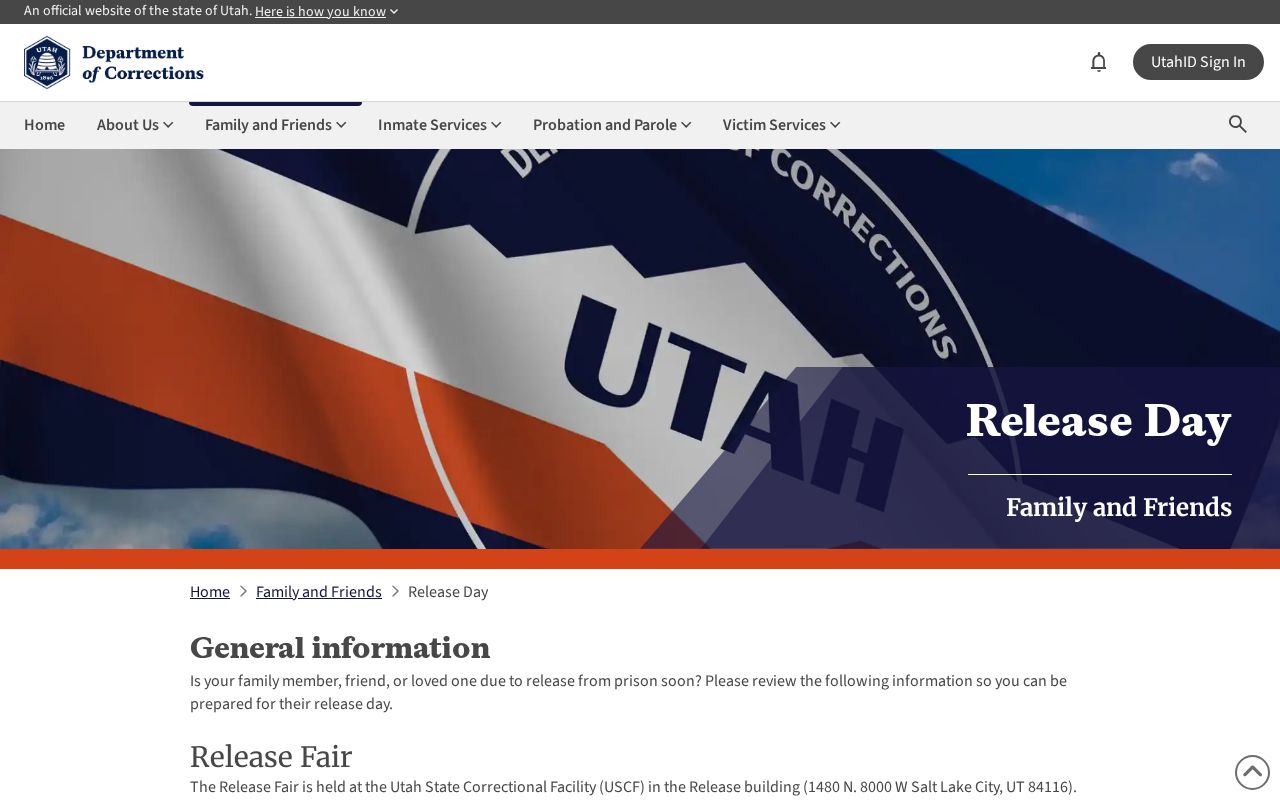
These are state-prison logistics, not the rule for a Davis County pretrial or county-commitment release. The official UDC release-day information directs families to verify the parole/release date through Offender Search or the Board. Its captured page illustrates that verification instruction.
After the scheduled day arrives, check for an actual status change. If a Board order remains future-facing, if UDC still reports incarceration, or if a receiving agency has a detainer, do not report physical release. A confirmed Davis County release date comes from the agency record that documents the custody event.
Note: A transfer ends one agency's custody but is not a community release when another authority immediately takes control.